
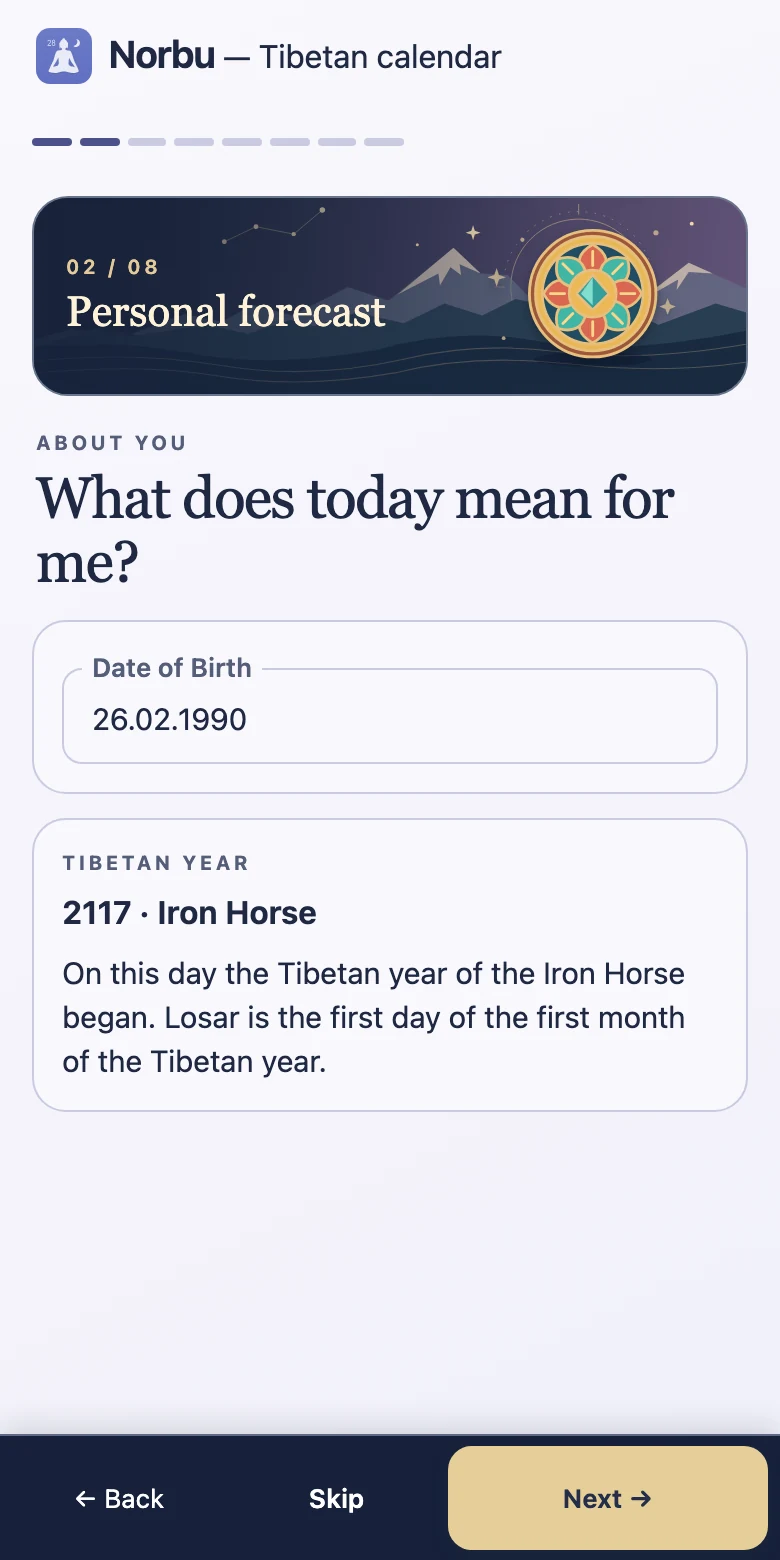
01 / 06
Your Tibetan birth year
Enter your birthday to find your year’s animal and element. The year changes at Losar, so the exact day matters for winter birthdays.
Tibetan astrology · Phugpa tradition
Explore lunar days, personal daily guidance and favorable moments in Norbu — a modern companion inspired by the Kalachakra tradition.



Norbu · Mini app
Open the calendar right in your messenger. The home screen pairs today’s date with the lunar day and Moon phase. From there you can explore your personal reading, colours and practices.
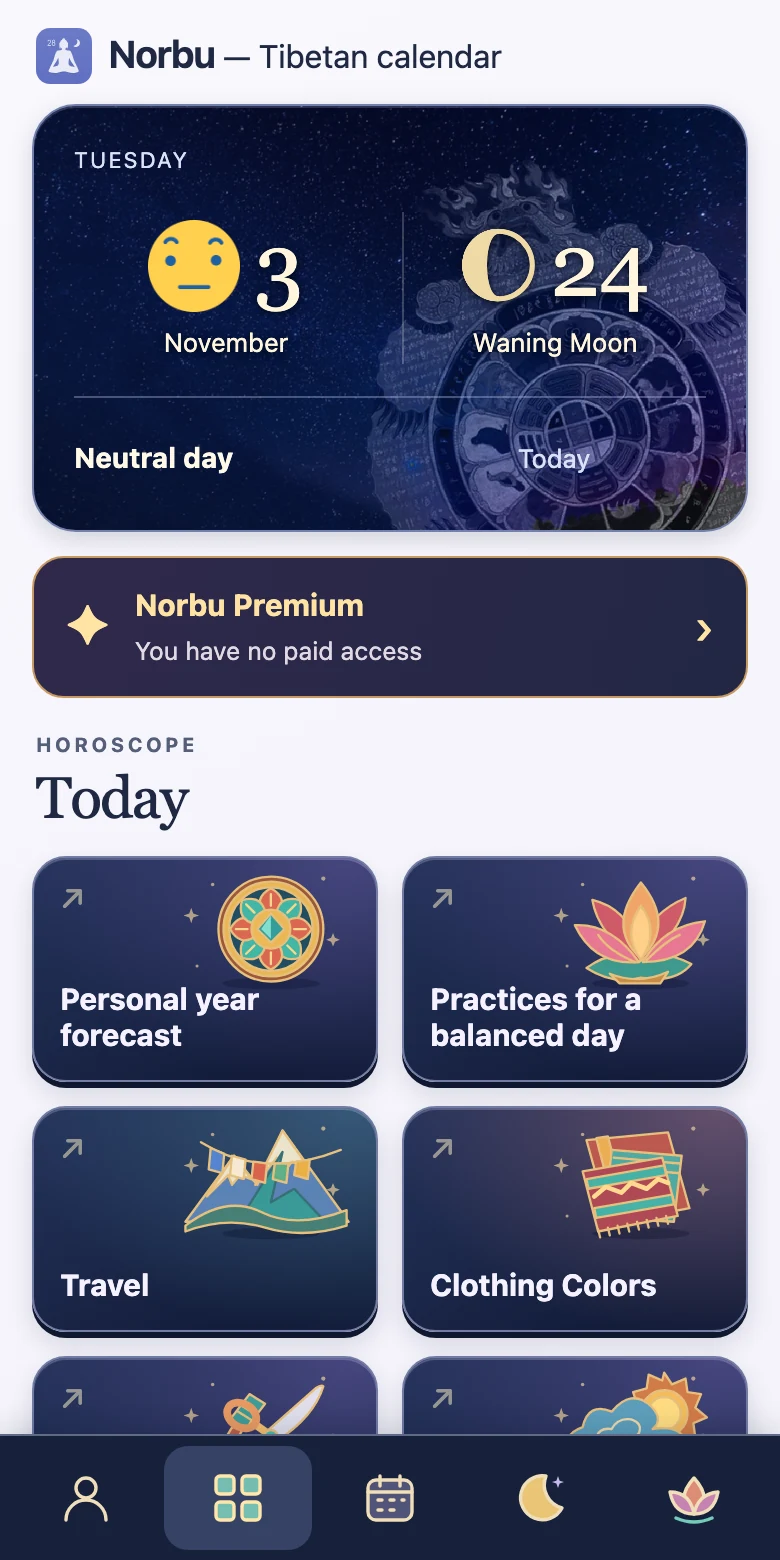
Two calendars meet in one view. Beside today’s date you’ll find the lunar day, the Moon’s phase and a traditional reading for the day.
The Moon in your city
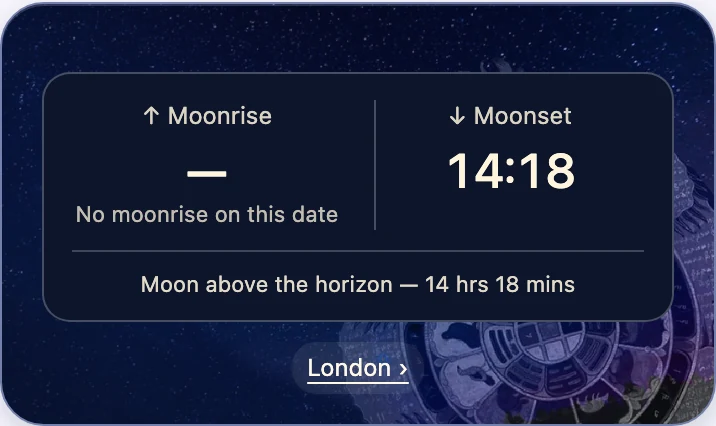
The day widget shows whether the Moon is waxing or waning. To find out when it rises above your horizon, choose your city in the lunar calendar.
Norbu uses the city’s coordinates to calculate moonrise, moonset and time above the horizon. Times are local to that city. Before you choose one, your time zone gives an approximate reading.
See the city reading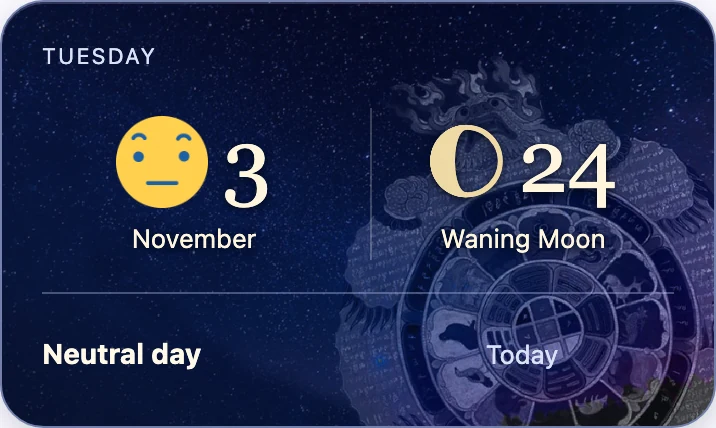
Inside Norbu
Explore the mini app, from finding your Tibetan birth year to choosing a bedtime meditation.
Enter your birthday to find your year’s animal and element. The year changes at Losar, so the exact day matters for winter birthdays.
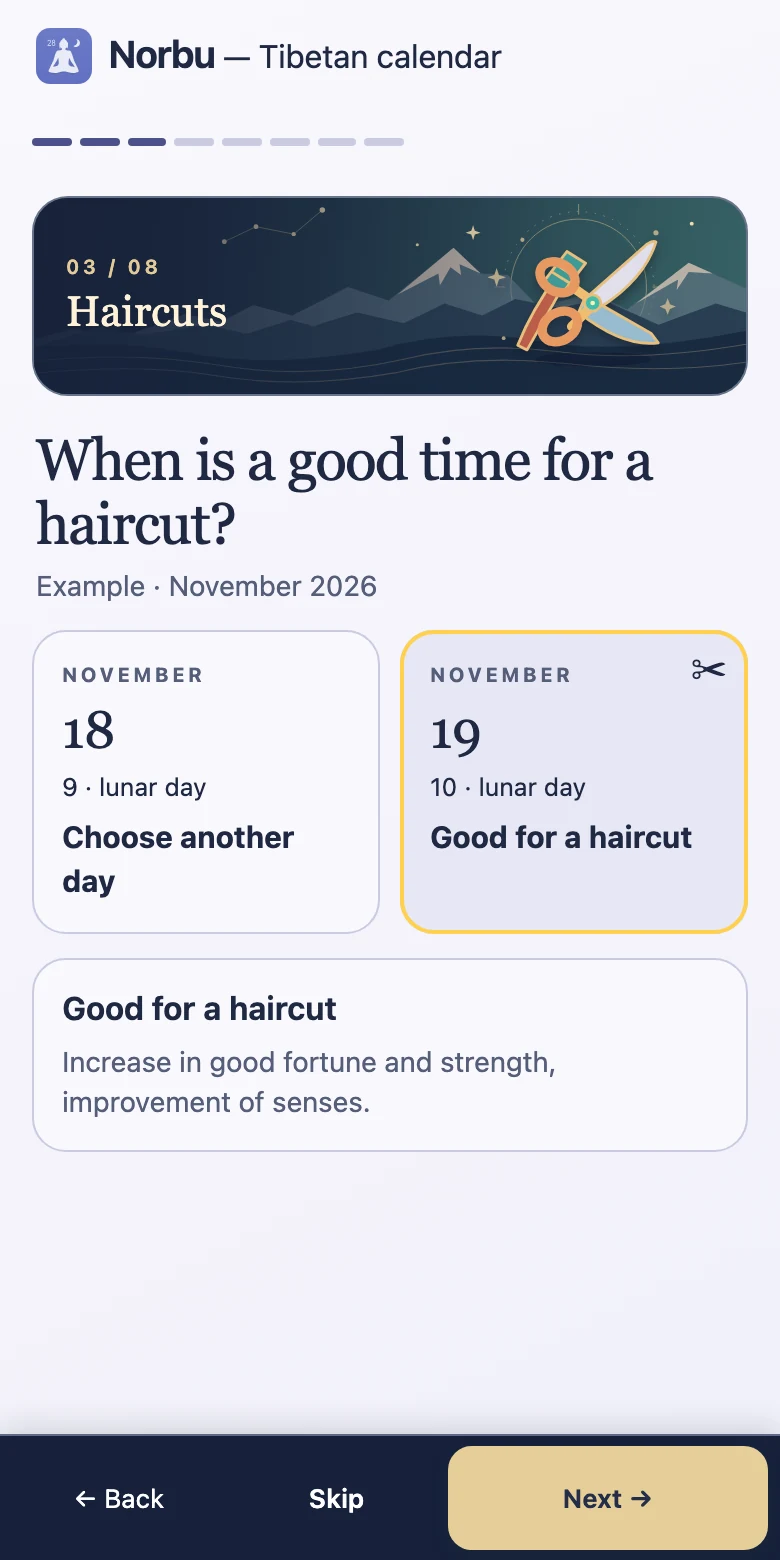
Compare two dates side by side. Tap a day to read the traditional meaning of getting a haircut on that lunar date.
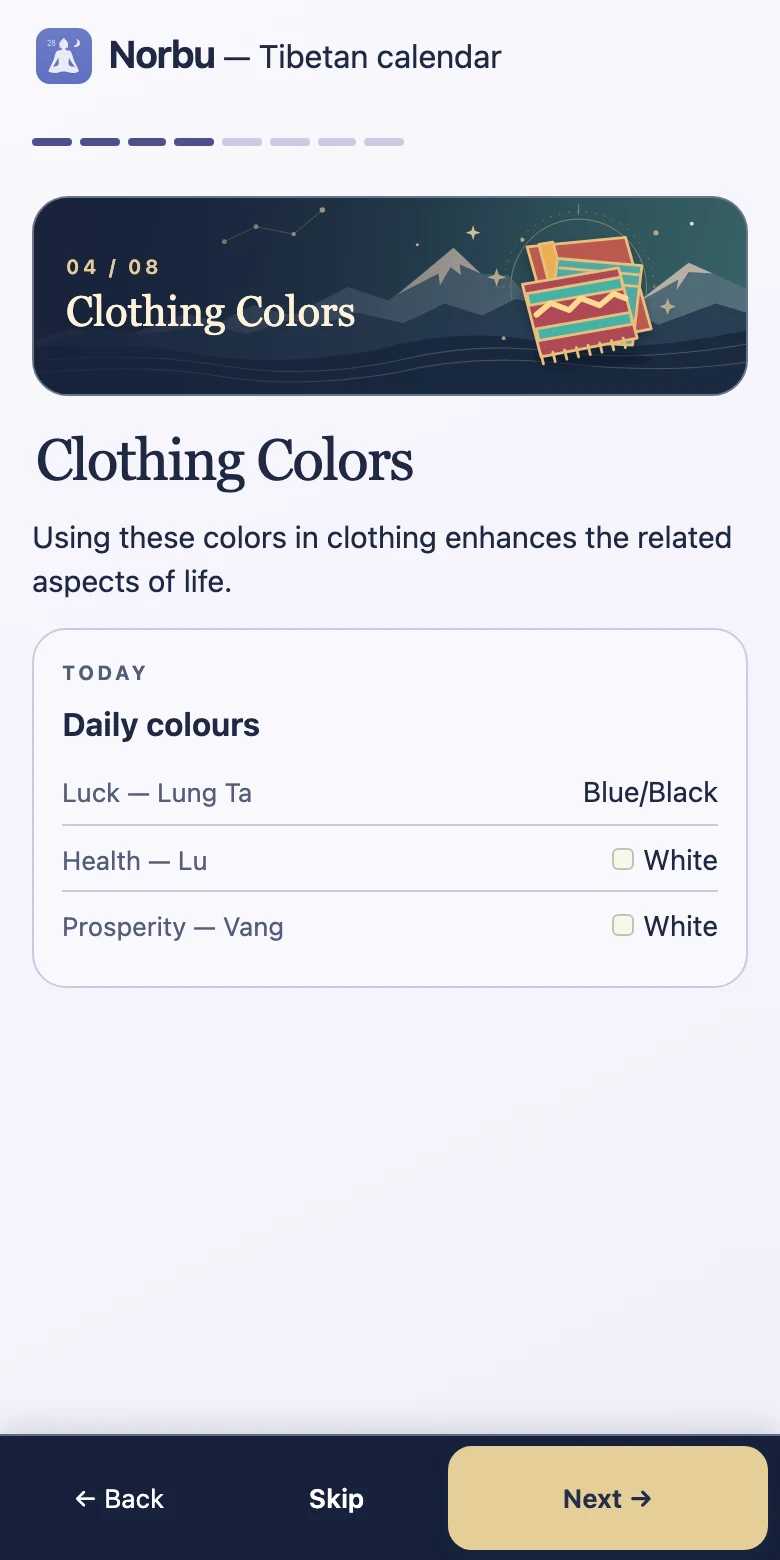
Each day has its own palette. In the tradition, Lungta relates to luck, Lu to health and Wang to prosperity. Norbu shows a colour for each.
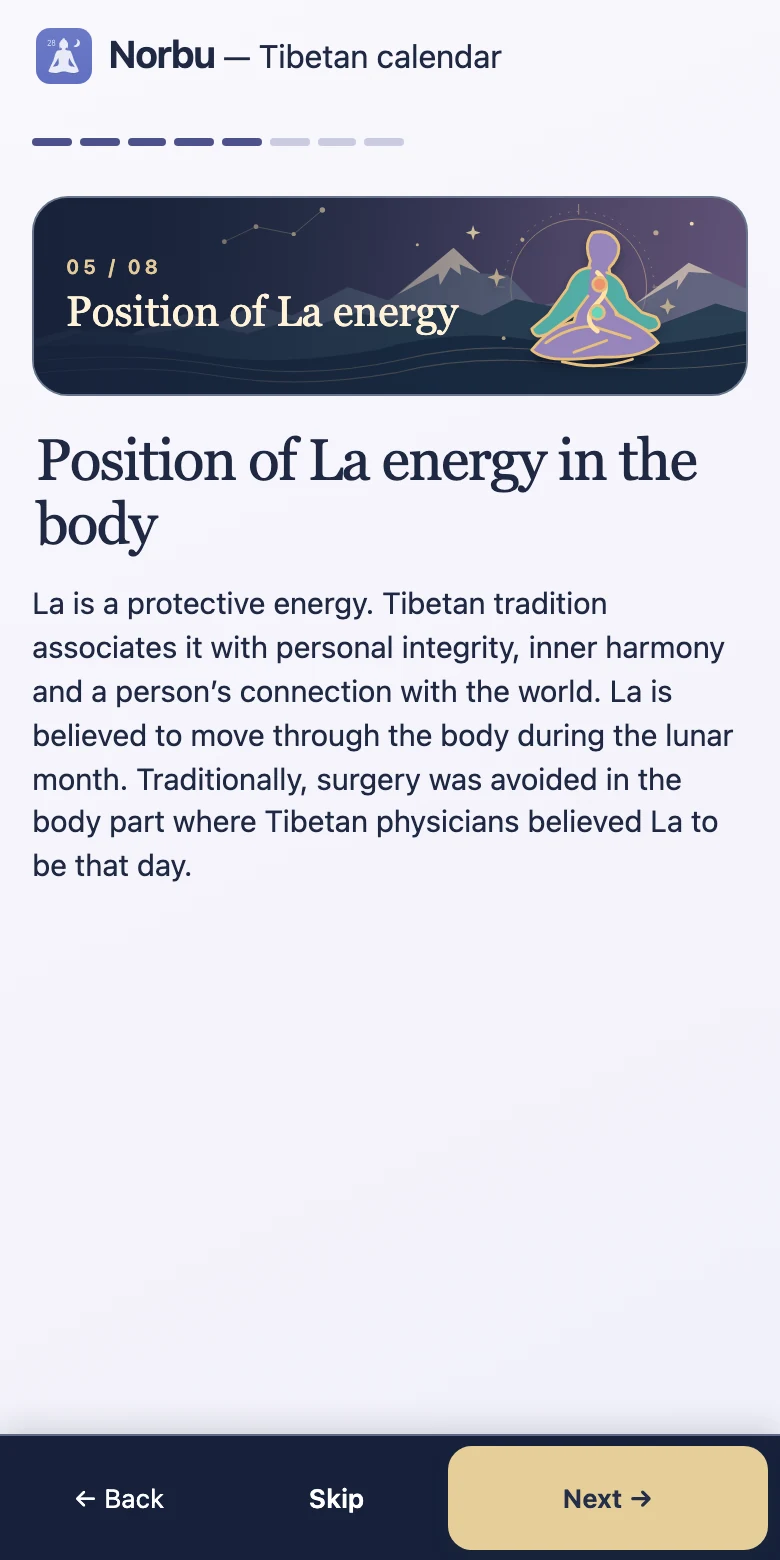
In Tibetan tradition, La is a protective energy. This screen explains how its position in the body is associated with the lunar day.
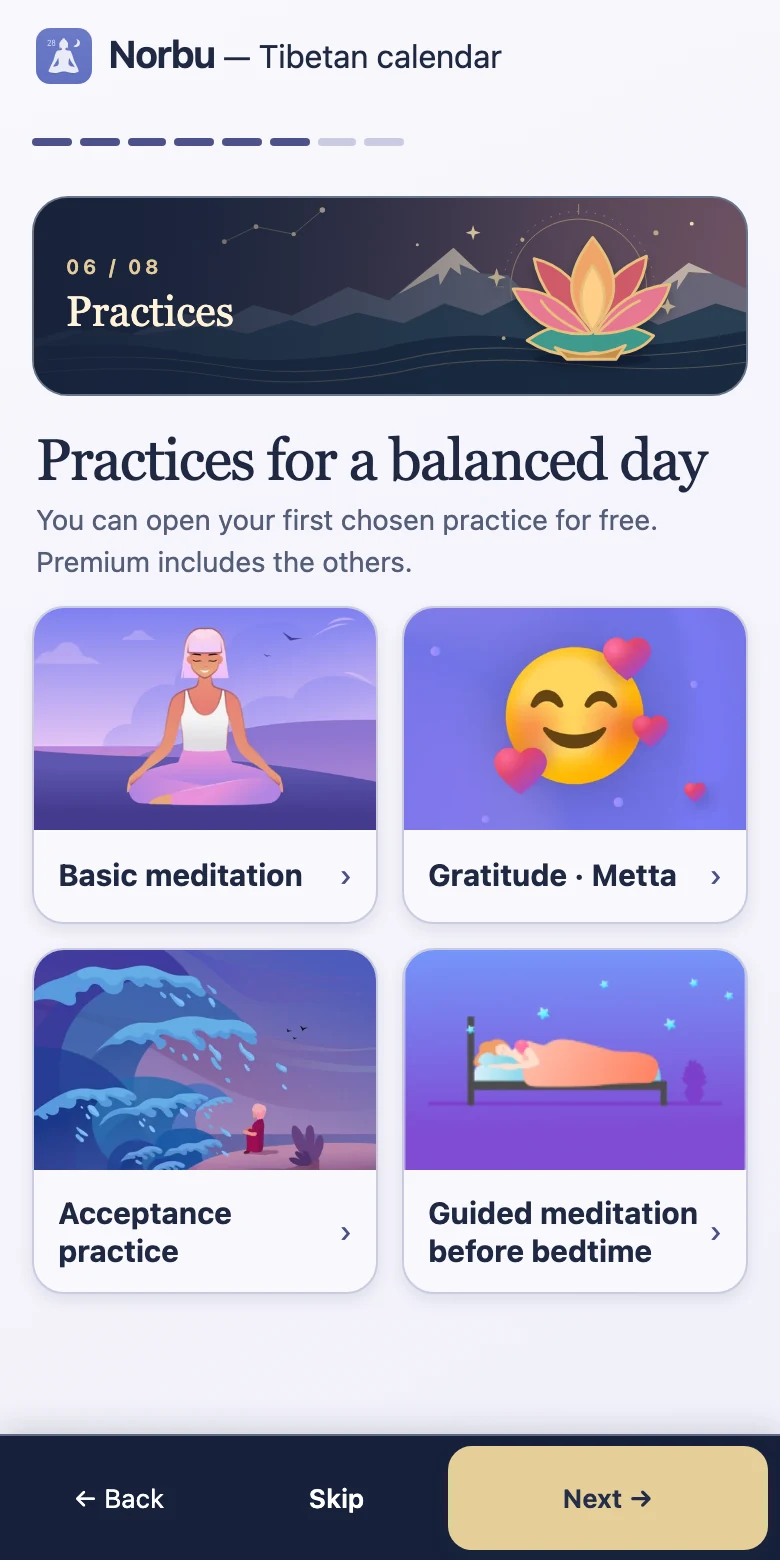
Choose a simple meditation, gratitude, acceptance or a bedtime practice. The first practice you choose is free to open. The others are included in Premium.
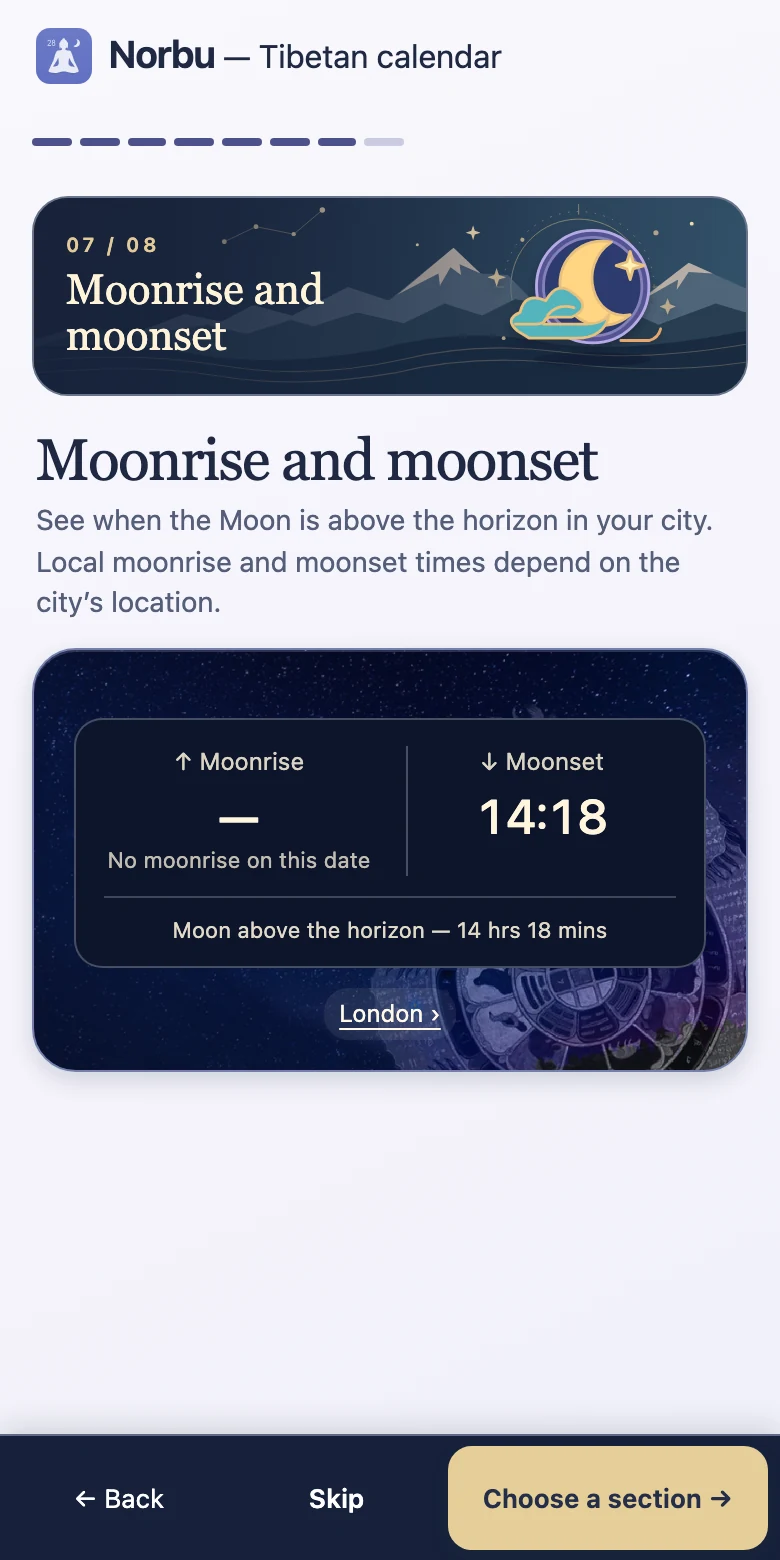
Choose a city to see local moonrise and moonset times, along with how long the Moon spends above the horizon.
Planning with the calendar
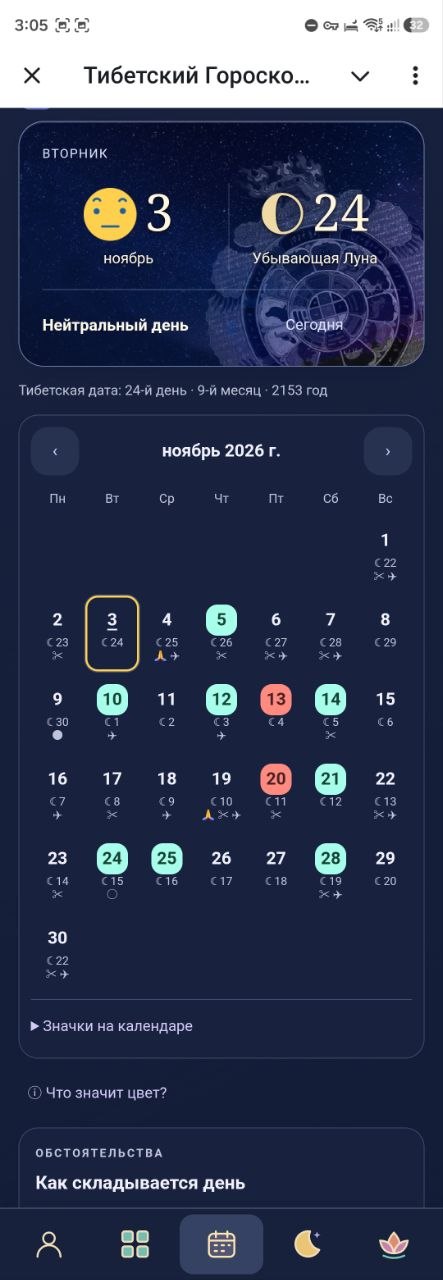
In Norbu’s monthly calendar, the colour of each date reflects its traditional Tibetan reading. Select a date in the mini app to explore the circumstances associated with that day.
Green marks a favorable date, such as November 5 in the screenshot.
Red marks a date to approach with care, such as November 13.
The date has no colour fill. The gold outline marks the selected date.
 Open full screenshot
A calendar with a lineage
Norbu’s lunar calendar follows the Phugpa system associated with Kalachakra astronomy. Lunar and solar days do not always align one-to-one, so a lunar day may repeat or be omitted. The app makes these cycles readable while preserving their traditional structure.
How the Phugpa calendar works→Useful guides
FAQ
Clear answers about the calendar and responsible use of its guidance.
No. Norbu presents traditional calendar interpretations as reflective guidance. Important decisions should always include your real circumstances and professional advice where relevant.
In the Phugpa system lunar days are mapped to solar days. Because the cycles have different lengths, some lunar dates repeat and others are omitted.
Yes. Norbu can keep profiles for people close to you so you can compare daily guidance when planning together.
Norbu app
Get personal daily guidance, lunar dates and favorable haircut days in Norbu for iOS and Android.